

[p]Speaking to [i][b]Flashscore[/b][/i] at the [a href="https://portugalfootballsummit.com/" target="_blank"]Portugal Football Summit[/a] shortly after his panel, the former [a href="https://www.flashscore.ca/team/ac-milan/8Sa8HInO/"]AC Milan[/a] CEO and senior advisor to football clubs explained why Serie A's rules are failing Italian talent, why [a href="https://www.flashscore.ca/team/como/ttyLthOA/"]Como[/a] should be treated as a benchmark rather than a problem, and what outsiders get wrong when they buy a football club.[/p][h2]Italy's World Cup dry spell[/h2][p]For Fassone, [a href="https://www.flashscore.ca/team/italy/hlKvieGH/"]Italy's[/a] absence from three straight World Cups cannot be pinned on one cause. Instead, he points to a long decline in the quality of the domestic game, with no Italian club winning the Champions League since Inter in 2010.[/p][p]"There are a lot of reasons, not just one," he told [i][b]Flashscore[/b][/i]. [b]"But when you have a cycle this long, you are obliged to look at the structure and the rules of the system. When you check the data available today, you see that Italian players are barely being used in Serie A. The football product generated by Serie A today is weak."[/b][/p][p]He believes the regulatory framework itself is the root of the problem, and that change has to come from the top.[/p][p]"The current rules are not supporting the development of Italian talent and Italian players," Fassone said. [b]"Let's hope that with Roberto Mancini now, and with the new president of the federation, we can set up new rules to support the level of our football."[/b][/p][image alt="Italy's upcoming Nations League games." id="ec1045f4-509b-4f06-83d5-7f9820fe1569" credit-line="Flashscore" guid="73d8df77-f501-4295-9b20-ce9b8438ccd8" original-width="2160" original-height="2700" /][p]While he stopped short of prescribing specific measures to the federation, Fassone was clear about the scale of the issue. The shortage of Italian players in Serie A, he argued, has left the national team with a dangerously small pool to choose from.[/p][p]"The total number of Italian players eligible for the national team is very, very low," he said. [b]"In his last call-up a few days ago, Mancini was obliged to look outside Italy to find eligible players. With the general laws of the European Commission, you need to find room to reward the clubs that support the national team. If you don't do that, it will be difficult to find a way out of the hole."[/b][/p][h2]Como's rise[/h2][p]Few clubs illustrate the tension between club ambition and national interest better than Como. Their rapid rise has been accompanied by criticism over a lack of Italian players, with the club only able to register around 20 players for the Champions League and paying a premium for homegrown signings such as [a href="https://www.flashscore.ca/player/kean-moise/QPclX9Uq/"]Moise Kean[/a].[/p][p]Asked whether Como are part of the problem or part of the solution, Fassone answered simply: "Both."[/p][p][b]"The Como story, in my view, is extremely interesting,"[/b] he said. [b]"I like what they have done in the last three or four years. I think they are a benchmark for other clubs. But the perspective of a single club is not the same as the perspective of the federation. They do not have the same goal."[/b][/p][p]He explained that Como set out to build a new top club in Italy through a completely different strategy, one built on marketing and the global appeal of Lake Como itself. The shortage of Italian players, in his view, is a natural consequence of that approach rather than a flaw in it.[/p][embed guid="f122c530-9cc0-4da3-a347-86c316d06cde" url="https://x.com/Como_1907/status/2101693846643978310" social-type="twitter" /][p]What Como really exposes, Fassone argued, is a deeper problem with the financial rules clubs face at both European and national level. Under current regulations, clubs can only spend 70 to 85 per cent of their revenue on salaries and transfer fees, depending on the country, which makes rapid growth almost impossible for smaller clubs.[/p][p][b]"Como are not compliant with FFP, because you cannot grow your club if your revenues are low,"[/b] he said. [b]"If Como had respected these rules, they would not be where they are today."[/b][/p][p]He insists the responsibility lies with the governing bodies rather than the club. "The combination of financial rules and football rules is not in the hands of the clubs. It is in the hands of the Italian federation and UEFA," he said. [b]"We need cases like Como. They are very, very important. They are not something we should cancel or dismiss by saying they are not complying with the rules."[/b][/p][p]That does not mean Fassone backs Como's leadership's stance that they will simply pay any FFP fines and carry on. "That's not the solution," he said. "You cannot just say, 'Okay, we paid the fine.' It is not a long-term solution."[/p][p]As for how Como climbed so quickly, Fassone credits a classic entrepreneurial mindset, investing heavily in infrastructure and players long before the revenues arrived.[/p][p]"How can you improve your product if you wait for revenues to grow?" he said.[b] "Revenues grow after you have invested, and that is true in every business, not only football. They were probably quicker than they expected at the beginning. But they did what I recommend. If you are an entrepreneur, you have to invest first, and then the results will arrive."[/b][/p][h2]Club ownership[/h2][p]Multi-club ownership has become one of the defining trends in modern football, with City Football Group and Chelsea's owners BlueCo building networks of clubs. Fassone, who advises club owners and counts Udinese and Watford owner Giampaolo Pozzo as a close friend, believes it can work when done properly.[/p][p][b]"From a business perspective, I think multi-club ownership is a system that can work,"[/b] he said.[/p][p]The key, according to Fassone, is diversity within the network. That means clubs of different sizes and divisions, spread across countries with different regulations, such as Portugal's advantages with Portuguese and Brazilian players or Switzerland's rules on how many foreign players can be on the pitch at once.[/p][image alt="Fassone was one of the speakers at the first Portugal Football Summit panel." id="00527470-2936-418c-8f07-d0a39c86e720" credit-line="Portugal Football Summit" guid="8bc8ba64-8540-439f-8351-8bc76e8d7e91" original-width="5783" original-height="3855" /][p]"You can build a career path for your players, starting at the smallest club and moving up," he explained. [b]"If you manage the financial side well, with loans and transfers, you can protect a club that is struggling with a club that is healthy at that moment. If you do all of this while respecting the rules, and avoid having clubs competing in the same international competition, I am very confident that multi-club ownership can be a good route to growth."[/b][/p][p]Having advised numerous investors entering the game, Fassone also identified the most common mistake made by newcomers: assuming football works like any other industry.[/p][p][b]"The natural assumption when you invest in something new is: 'If I have been successful in real estate or another industry, I can be successful in football using the same rules,'"[/b] he said. [b]"That is the first thing I try to teach them. Football is a completely different world. It is the only world where your players, your employees, are a financial asset."[/b][/p][p]His advice to incoming owners is to adapt rather than transplant. "You can certainly bring something from your original business, but not all of it," he said. "I try to teach them not to make too many mistakes at the beginning by thinking they can bring exactly the same experience they had before."[/p]
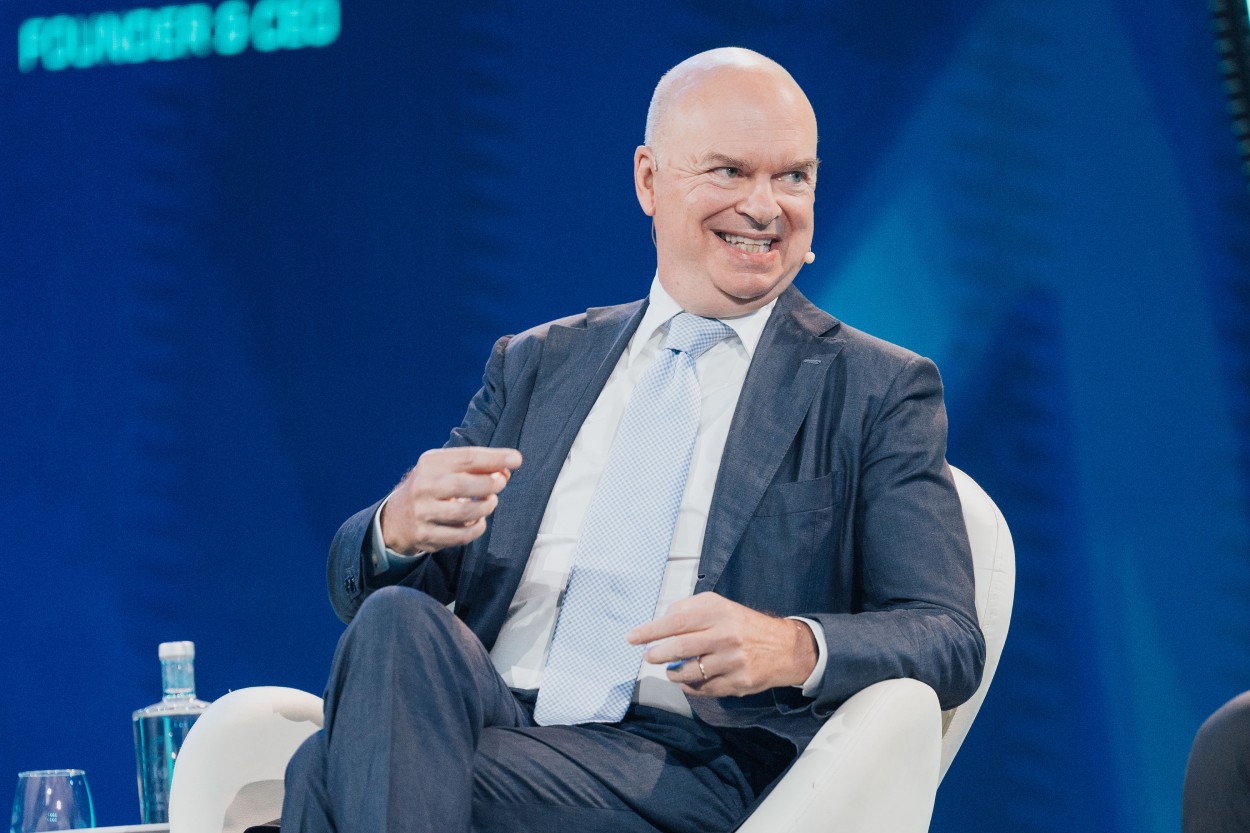
EXCLUSIVE: Ex-AC Milan CEO Fassone on Italy's crisis, Como's rise & multi-club ownership
Italy became the first former world champions to miss three consecutive World Cups, and experienced executive Marco Fassone believes the problem runs far deeper than any single coach or campaign.
Related stories
⚽ Football
New
Brazil and Australia meet in double-header as post-World Cup rebuild begins
AFP
⚽ Football
New
Manchester United offer supporters chance to win piece of Old Trafford turf
Reuters
⚽ Football
New
Why Guinea are among Bafana Bafana's toughest African opponents ever
Nick Said
⚽ Football
New
Arsenal escape as OL Lyonnes score eight: Stats from Women's Champions League Matchday 1
David Parkes

⚽ Football
New
OL Lyonnes, Barcelona enjoy comfortable wins in Women's Champions League
AFP

⚽ Football
New
England captain Harry Kane considering move to NFL later in his career
Reuters